

Sciatica
That burning line of pain from your back down your leg has a cause. We find it and treat it directly.
What is going on?
Sciatica is not a diagnosis; it is a symptom of something pressing on or irritating the sciatic nerve. A herniated disc, stenosis, or a tight piriformis muscle can all produce it, and each needs different treatment. That is why cookie-cutter care fails, and precise care works.
Available at Our New Jersey Locations
We treat sciatica at all five WeCare Medical offices: Maplewood | Edison | Wayne | Fort Lee | Jersey City. Call (973) 996-2990 to book your visit.
How WeCare treats it
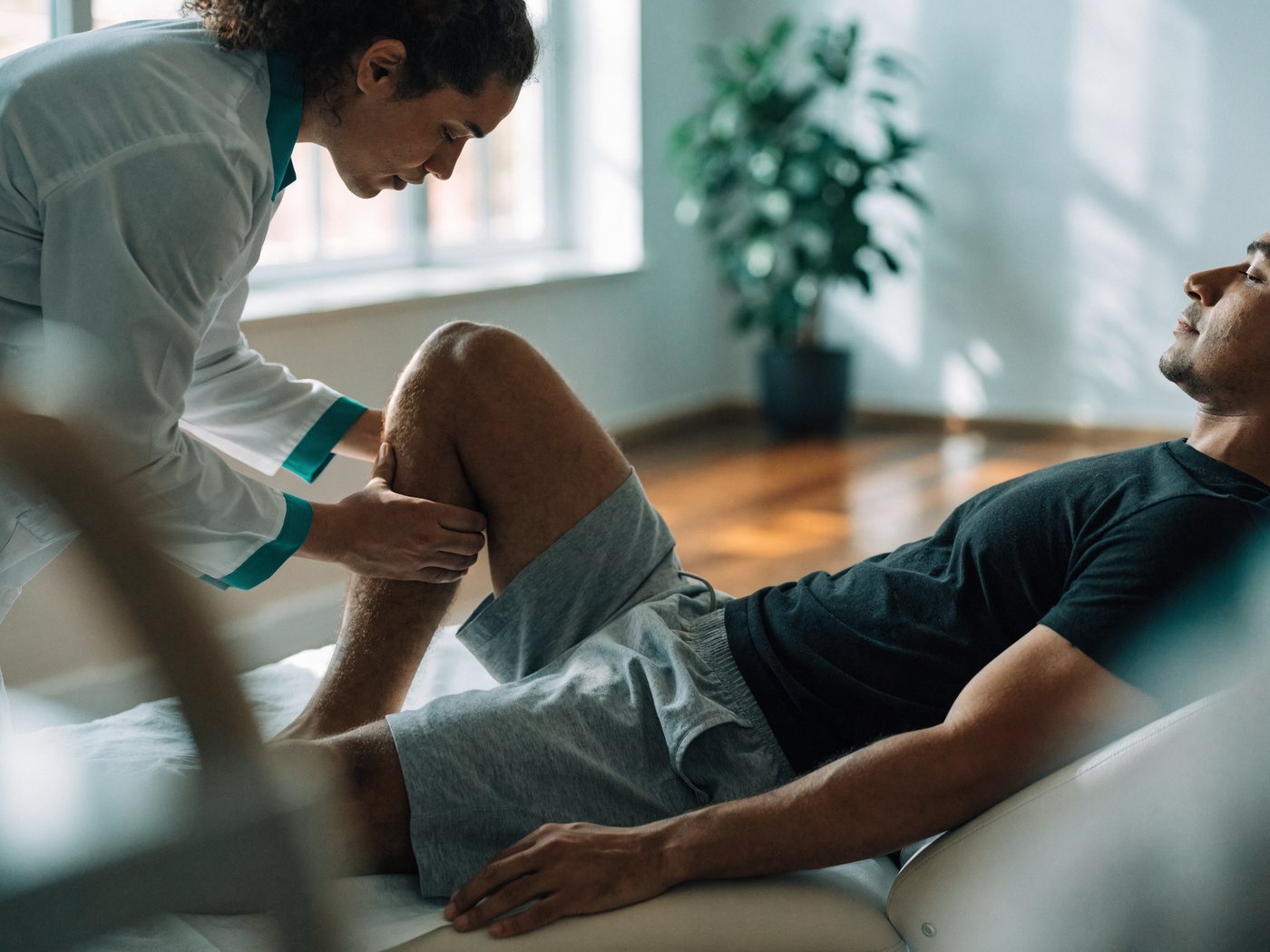
Treatment starts with a precise diagnosis, then the least invasive option that will actually last. For sciatica, that typically involves:
- Pain radiating from the lower back down one leg
- Burning or electric sensations
- Numbness or pins-and-needles in the leg or foot
- Pain that worsens with sitting
- Leg weakness in more severe cases
In depth
Sciatica is a type of nerve pain that results from an injury or irritation to the sciatic nerve located in the buttocks/gluteal region. Sciatic nerves are the longest and thickest nerves in the body (nearly finger-width). The lumbar spine actually has five nerve roots: two from the lower back and three from the final section. Together, the five nerve roots form the left and right sciatic nerves. Each sciatic nerve pain runs between your hips, buttocks, leg and just below the knee on one side of your body. Sciatic nerve branches then form other nerves that continue to your foot and toe. A leg numbness sensation and pins-and-needles tingling sensation are also possible symptoms.
This condition causes pain to radiate down the back of your leg and down your lower (lumbar) spine. The discomfort can occur almost anywhere along the nerve pathway; however, it’s most likely to affect your low back, buttocks, thighs, and calf.
In addition to mild aches and pains, the pain can range from sharp, burning sensations to excruciating pain. There can be times when it feels like being shocked or jolted. Coughing and sneezing can exacerbate the symptoms, as well as prolonged sitting. It usually only affects one side of your body.
In some cases, the affected leg or foot will also be numb, tingling, or weak. It is possible that one part of your leg is painful and the other portion is numb.
What causes sciatica?
As a result of pinched sciatic nerves caused by herniated disks in the spine or overgrown bones (bone spurs) on your vertebrae, sciatica can occur. More rarely, a tumor can compress a nerve or a disease like diabetes can damage it. There are several causes of sciatica , including:
- The pressure caused by a herniated disk or slipped disk on a nerve root. Sciatica is caused by this most common condition. A slipped disk occurs to 1% to 5% of all Americans at some point. Between each vertebra of the spine are disks that cushion it. When a disk bulges (herniates), it may be due to compression from the vertebrae.
- A degenerative disk disease occurs when the disks between the vertebrae of the spine naturally wear down. Spinal stenosis is caused by the wearing down of the disks as their height shortens (spinal neoplasia). Sciatic nerve roots can be pinched as they leave the spine due to spinal stenosis.
- The abnormal narrowing of the spinal canal is called spinal stenosis. Nerves and spinal cord are reduced in space due to this narrowing.
- The slipped vertebrae causes the nerves from one spinal column to enter the spinal column through a narrower opening. With- Sciatic nerves pain can be pinched by the extended spinal bone.
- An osteoarthritis. In older spines, bone spurs (jagged edges) can form and compress nerves in the lower back.
- Spinal or sciatic nerve injury due to trauma
- Compression of the sciatic nerve by tumors in the lumbar spinal canal
Sciatica is not always preventable, and it may recur. You can protect your back by doing the following:
- Regularly exercise. Make sure to pay special attention to your core muscles, which affect your posture and alignment. Find out what activities your doctor recommends.
- When you sit, keep a proper posture. Seats with armrests, swivel bases, and good lower back support are ideal. If you want your back to maintain its normal curve, place a pillow or rolled towel nearby. Ensure that your knees and hips are level.
- Make sure your body is moving correctly. Stand for long periods of time and rest one foot occasionally on a box or stool. Make sure it’s only your lower extremities doing the work when you lift something heavy. Straighten your body from top to bottom. Bend your knees only, keeping your back straight. Maintain your body’s position when carrying a load. Lifting and twisting should not be done at the same time. When lifting heavy or awkward objects, find a lifting partner.
In most cases, surgery is not necessary for sciatica. The most important thing is to give yourself time and to treat yourself well. For those who do not feel better with self-care, see a healthcare provider. It may be necessary to refer you to other spine health specialists if your healthcare provider cannot definitively determine the cause of your pain. Our best pain management doctor is ready to help you out.
Both sides of the spinal cord carry the sciatic nerve. After running through the buttocks and hip, it branches off towards the legs. Providing sensation to the outer foot and leg, this nerve is the longest in the body. There is no disease or injury associated with sciatica. Sciatica rather refers to symptoms of a wide range of health conditions. As the name suggests, sciatica is a painful, numbing condition affecting the buttocks and leg, causing pain at the foot or ankle. There is a possibility that sciatica sufferers feel burning, sharp, or shooting pain. The affected leg may feel weak. Coughing, for example, may aggravate the pain.
There is no difference in the risks of pregnant women experiencing back pain versus sciatica symptoms. As a result of hormones produced during pregnancy, a woman’s body may loosen and stretch, causing back pain.
The risk of developing sciatica in pregnancy is not increased by a herniated disk.
Sciatica pain is usually self-limiting; surgery is rarely required to relieve it. In approximately half of the cases, recovery is possible within six weeks.
Prevention of sciatica
In some cases, a person can avoid getting shingles. Exercise regularly and maintain good posture when standing, sitting upright, and lifting objects can help you reduce the risk of getting it.
How is sciatica diagnosed?
It is generally not necessary to seek medical treatment for mild sciatica symptoms that last 4-8 weeks.
An accurate medical history might be helpful. The doctor may also instruct the individual to do basic exercises, as well as stretching the sciatic nerve. Exercises of this nature normally result in pain shooting down the leg as the leg exerts itself.
An X-ray or an MRI may be required to diagnose the reason why the sciatic nerve is compressing and causing the symptoms.
Sciatica surgery is uncommon, but the most common procedures are a microdiscectomy, which removes a herniated disc fragment, or laminectomy, which removes a part of a vertebra to expand the spinal canal. You now know what it is. In order to treat sciatica, you must understand what causes it. The first step toward feeling better is getting a diagnosis and identifying the cause of your sciatica.
If you have above symptoms and conditions of sciatica pain, WeCare Medical Specialty Group can help you. We have five offices across Northern Jersey. Please call our office at (973)996-2990 or book an appointment online immediately.
Questions we hear every day.
Untreated flare-ups can last weeks to months. With accurate diagnosis and targeted treatment, most patients improve substantially faster.
Complete rest usually makes sciatica worse. Guided movement is part of nearly every effective plan.
An epidural steroid injection at the affected level often calms nerve inflammation enough for rehabilitation to work. Your specialist confirms if it fits your case.
New loss of bladder or bowel control, or rapidly progressing leg weakness, needs immediate emergency care.
Ready to be done with it?
Same-week appointments for sciatica at five New Jersey offices.