

Spondylosis (Spinal Arthritis)
Arthritis of the spine. Extremely common with age, and very treatable when it becomes painful.
What is going on?
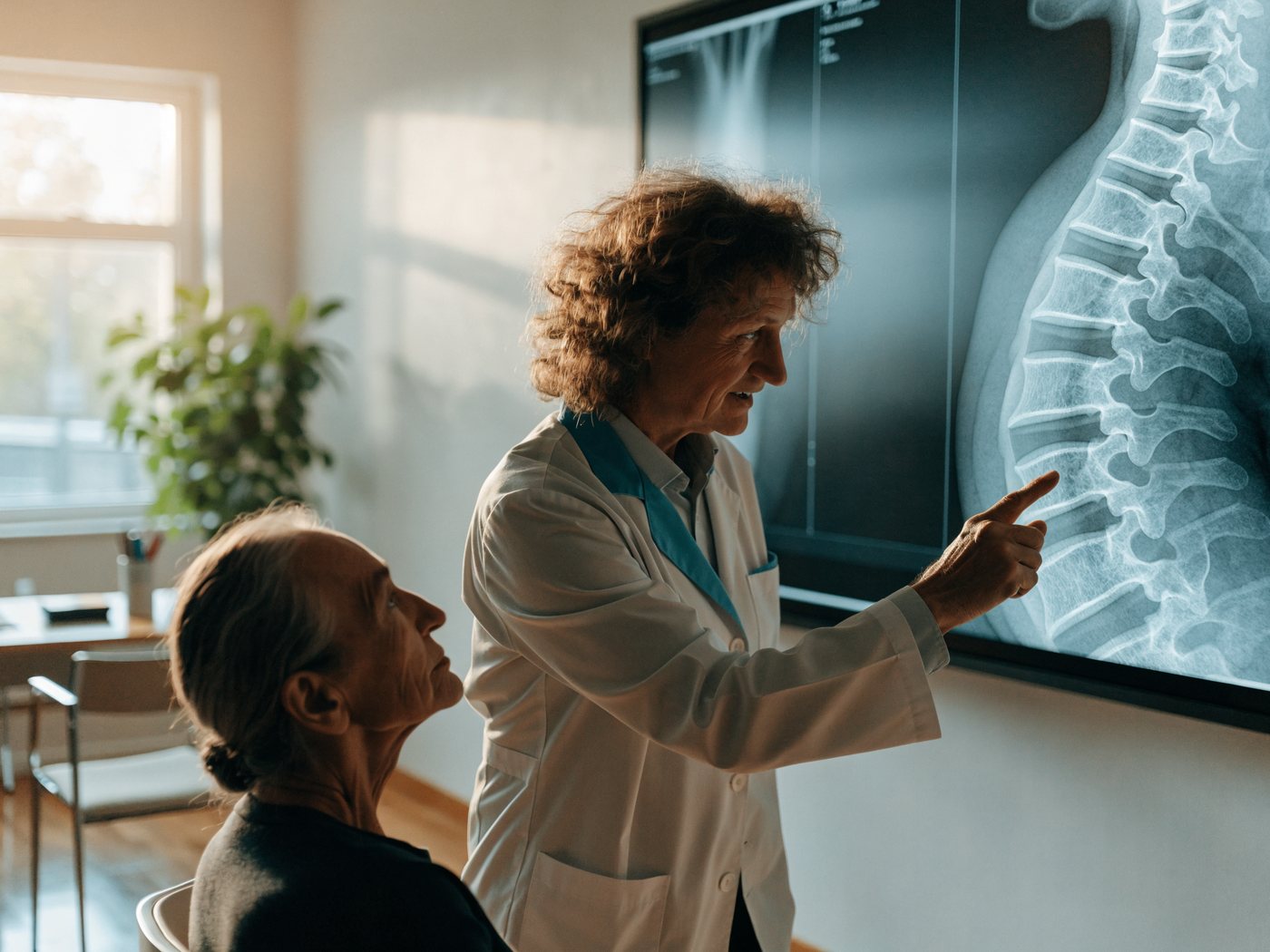
Spondylosis is the umbrella term for age-related wear in the spine: disc thinning, facet joint arthritis and bone spurs. Like grey hair, it shows up on imaging in most people eventually. When it produces pain, that pain most often comes from the facet joints, which is good news, because those joints respond well to targeted injections and radiofrequency ablation.
How WeCare treats it
Treatment starts with a precise diagnosis, then the least invasive option that will actually last. For spondylosis (spinal arthritis), that typically involves:
- Stiff, aching neck or back
- Pain worse with extension or twisting
- Morning stiffness that eases with movement
- Grinding sensation with motion
- Pain that worsens through the day
In depth
As the spine deteriorates, it may lose its typical form and function, a condition known as spondylosis. The spine can be affected by spondylosis located along with the cervix, thoracic, or lumbar regions. The condition is also called OA or arthritis. The gradual deterioration of the bones causes spondylosis, which is an arthritic condition that affects the vertebrae. This can be caused by degeneration of articulations, or by the growth of bone spurs on vertebrae. Affected nervous system functions, as well as the spine’s ability to move, can result from these changes.
The condition is widespread but usually doesn’t cause severe problems. While some people may experience pain, most people who have it do not feel any pain. In most cases, surgical treatment is not required for spinal osteoarthritis. If the physician diagnoses a herniated disc and spondylosis that is not treated non-surgically (e.g., with medications), he can recommend surgery.
Cervical spondylosis can be a result of wearing down on bony cartilage in the body. The following are factors that may contribute:
- Ankylosing spondylitis : Bone overgrowths are caused by strengthening the spine by growing additional bone. The extra bone can, however, put pressure on sensitive areas like the spinal cord and nerves, causing pain.
- Insufficient hydration of spinal discs: A disc is a pad-like cushion between the vertebrae that absorbs the shock caused by different activities. Discs in this category are susceptible to drying out over time because of the gel-like material. This can cause your spine to rub against each other, causing pain.
- Lumbar herniation: There is the possibility of the cushioning material leaking from fissures in spinal discs. Itching in the arms and radiating pain can result from this material pressing on the spinal cord and nerves.
- Trauma: A neck injury can speed up the ageing process. In time, the stiff cords joining the vertebrae in your spine get tighter over time, which results in a restricted range of motion and tightness in the neck.
- Abuse: A lot of activities require repetitive movements and heavy lifting (such as construction). This can result in premature deterioration of the spine due to excess pressure.
Elements contributing to the problem
As we age, we are more likely to develop cervical spondylosis. Age-related postural changes are often the cause of cervical spondylosis. The ageing process can result in herniated discs, loss of moisture, and follicular niggling. In addition to ageing, other factors contribute to this disease. Here are some examples:
- Injuries to the neck: Work activities that involve lifting heavy objects can put added strain on the neck. The constant position of your neck or repeatedly moving your neck regularly can cause neck pain and stiffness.
- Factors genetically related to cervical spondylosis (family history)
- A sedentary lifestyle and excessive weight
A majority of patients do not show prominent symptoms. When symptoms do appear, these may differ in severity, and they can build up over time or appear suddenly. The most prevalent condition includes shoulder pain. A few people experience pain in their fingers and along their arms. The pain increases when:
- Taking a seat
- Turning your head backwards
- Trying to cough.
Muscle weakness is another common sign. It is difficult to raise a hand or hold things tightly when the muscles are weak.
Additional signs may be:
- Increasing stiffness of the neck
- An intense burning sensation in the shoulders, arms, and legs, but also occurring at other points of the body.
- Impaired equilibrium and inability to control one’s bowel movement are two symptoms that occur less frequently. A doctor should be consulted as soon as possible if you experience these symptoms
Seeking medical attention:
See your physician if you experience sudden discomfort in your body parts, such as losing control of your bowels or bladder. Medical help is necessary in this case. You can seek medical assistance if your pain and discomfort begin to interfere with your daily activities. Even though this ailment is often caused by old age, treatments exist to reduce its symptoms.
Tests and identification of the disease:
It is important to eliminate other conditions, including fibromyalgia, before determining whether your condition is cervical spondylosis. In addition to assessing mobility, one must also determine other affected components. Depending on the specific nature of your condition, the doctor may recommend you see an orthopedist, neurosurgeon, or neurologist for additional evaluation.
- Examination of the body
To determine your symptoms, a professional may ask for a few details. Afterwards, they’ll move on to tests. In addition to checking your muscles, your doctor may check your muscles for weakness or check your flexibility in your neck. It is also possible that your doctor will observe the way you walk. These measurements help to identify whether your nerves or vertebrae have been overloaded.
- Bone spurs can be detected by X-rays.
- Getting an MRI of your neck can give you more information.
- A magnetic field and radio waves are used in this process to produce images that help to identify injured nerves.
- Myelograms highlight specific areas of the spine using dye injections. A CT scan or X-ray is used to get a better view of such structures.
- EMG measures how well your nerves transmit electrical impulses. The electrical activity of your nerves is measured by this test.
During a nerve conduction study, nerve signals are measured. During this process, electrodes are placed near the nerves.
Patients with cervical spondylosis are treated to relieve pain, limit disability, enabling them to lead productive lives. There are usually many treatment methods that work well.
Physical therapy might be recommended by your doctor. Physical therapy is beneficial for stretching the head and shoulders. Ultimately, this alleviates discomfort by strengthening them. The traction on your neck may also be causing pain. By using weights, the cervical discs and nerve roots will be relieved of pressure as well as joint space will be increased.
If over-the-counter (OTC) medications do not work, your doctor may recommend medicine. Among them are:
- Treatment of muscle spasms with drugs (Fexmid)
- narcotic pain relievers, like hydrocodone (Norco)
- Gabapentin (Neurontin) is an antiepileptic drug used to treat brain disorders caused by damaged nerves.
- Prednisone injections reduce inflammation of the tissue and thereby relieve pain
- To reduce inflammation, NSAIDs like diclofenac are prescribed
When above-mentioned treatment methods fail to work and you are in a very bad situation, you may need acupuncture treatment or surgery. For cervical spondylosis, surgical treatment is rare.
- Optional home treatments
Several home remedies can be tried. Take a painkiller like acetaminophen or ibuprofen or naproxen sodium. Warm or cold packs can be used on sore muscles to help alleviate pain. You can speed up your recovery by exercising regularly. You can feel more comfortable by wearing a soft collar. But using these for a prolonged time can weaken the muscles.
If you have above symptoms and conditions, WeCare Medical Specialty Group can help you. We have five offices across Northern Jersey. Please call our office at (973)996-2990 or book an appointment online immediately.
Frequently Asked Question
What is a neurosurgeon?
A neurosurgeon is a medical doctor who specializes in the diagnosis, treatment, and surgical management of conditions related to the nervous system, including the brain, spine, and nerves.
What conditions do neurosurgeons treat?
Neurosurgeons treat a wide range of conditions, including brain tumors, spinal cord injuries, herniated discs, aneurysms, epilepsy, and Parkinson's disease, among others.
What are the risks of neurosurgery?
Like any surgical procedure, there are risks associated with neurosurgery, including bleeding, infection, and damage to surrounding structures. Your neurosurgeon will discuss these risks with you prior to the surgery.
What types of surgeries do neurosurgeons perform?
Neurosurgeons perform a variety of surgical procedures, including brain surgery, spinal surgery, and peripheral nerve surgery.
How long does neurosurgery take?
The length of neurosurgery depends on the type and complexity of the procedure. Some surgeries may take a few hours, while others may take several hours or even multiple days.
Questions we hear every day.
Usually not. It is age-related wear present in most adults. It matters only when it causes symptoms.
When facet joints are the source, injections and radiofrequency ablation are highly effective, and ablation relief often lasts a year or more.
It progresses slowly with age, but pain does not track the imaging. Many people stabilize.
Yes, by most commercial plans.
Ready to be done with it?
Same-week appointments for spondylosis (spinal arthritis) at five New Jersey offices.