

PRP Therapy
Concentrating the healing factors from your own blood and placing them precisely where a tendon or joint is struggling to repair itself.
How it works
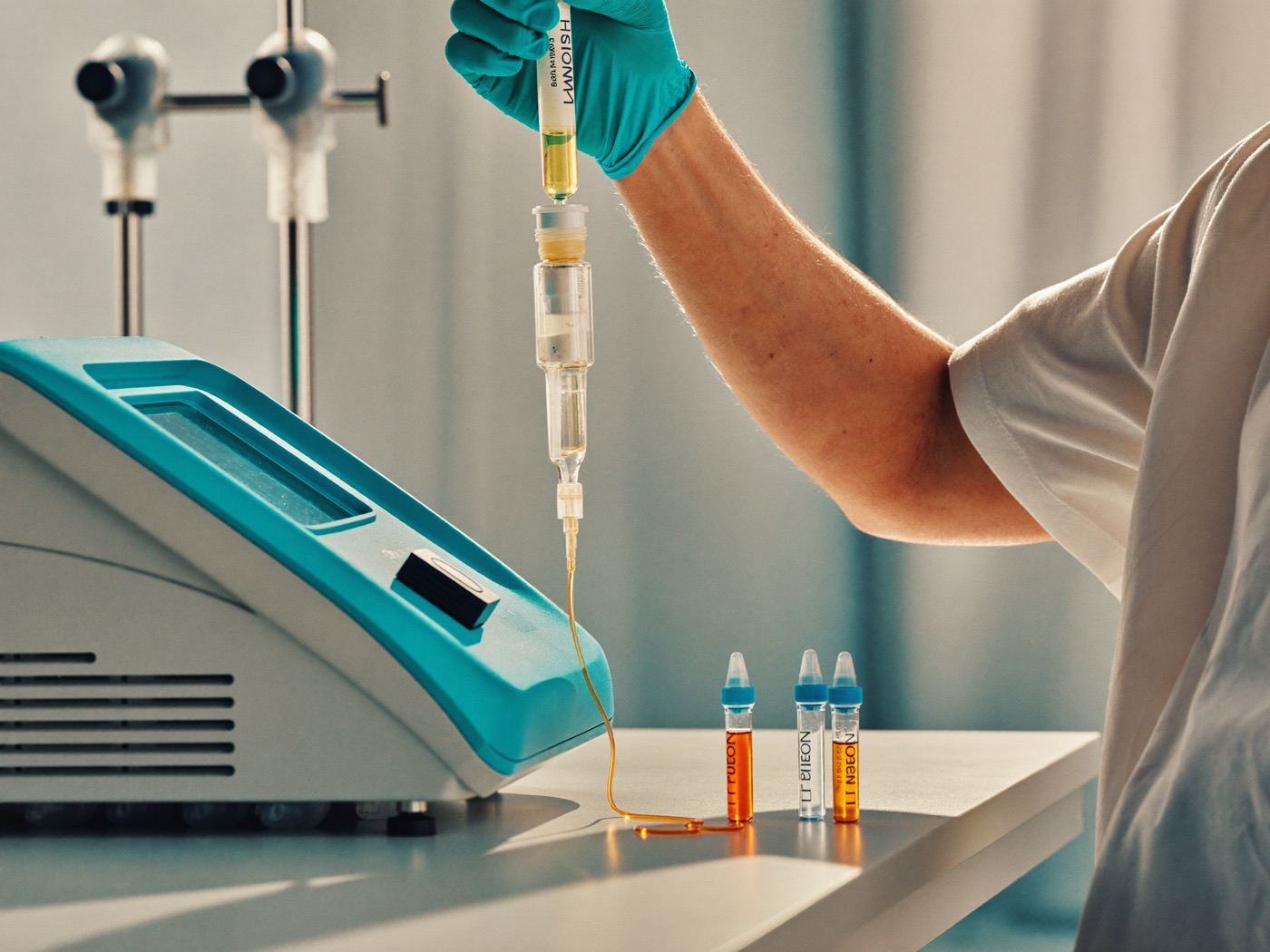
Platelet-rich plasma (PRP) is made from your own blood. A sample is spun to concentrate the platelets and growth factors, then injected under imaging into the injured tendon or joint. It is used for stubborn tendon problems and early arthritis, particularly in patients who want to avoid or postpone surgery.
What we treat with it
- Tennis and golfer’s elbow
- Chronic tendonitis
- Early knee arthritis
- Plantar fasciitis
- Partial tendon tears
What to expect
Assess the fit
PRP suits some problems well and others poorly. Your specialist will be straight with you about which yours is.
Draw and concentrate
Your blood is drawn and spun in-office to concentrate the platelets.
Guided injection
The concentrate is placed precisely into the target under imaging.
In depth
Platelet-rich plasma (PRP) therapy involves taking the patient’s blood and concentrating the levels of platelets and growth factors to promote healing in injured tissue. PRP can treat recent injury, inflammation and long-term degenerative disease. The treatment relies on the fact that normal blood contains cells called platelets that are rich in growth factors. These cells can be concentrated as PRP and then injected into the affected area to induce a healing response that helps to relieve pain.
Because PRP treatment use a person’s blood and are not considered to be “drugs,” the treatments are not subject to FDA approval before they can be used by practitioners. It’s important to understand that many procedures and treatments that are widely used in clinical settings are not approved by the FDA but are allowed because they are listed as being “cleared” for use. This is the situation with both PRP therapies and the devices, centrifuges, that are used to prepare PRP samples.
WHAT CONDITIONS DOES PRP TREAT?
- Tendinopathy/tendinitis/tendinosis (including jumper’s knee, Achilles heel, tennis elbow, golfer’s elbow among others)
- Osteoarthritis (wear and repair)
- Cartilage (chondral) injuries involving the lining of the bones
HOW DOES PRP THERAPY WORK?
The procedure involves taking a sample of the patient’s own blood and spinning it in a centrifuge. This concentrates the platelets and growth factors before injecting them into the injured body part to promote the body’s own healing response.
HOW LONG DOES DOES IT TAKE TO WORK?
Pain relief after receiving PRP therapy usually occurs in four to six weeks. In advanced or complex cases, this may take up to four to six months.
WHAT ARE THE POTENTIAL SIDE EFFECTS OF PRP?
Because PRP involves injecting a substance into the skin, there are potential side effects. PRP is autologous, which means it contains substances that come directly from your own body. This reduces the risks for an allergic reaction that can occur from injecting other medications, such as cortisone or hyaluronic acid. However, there are risks from the injection itself, including:
- pain at the injection site
You should discuss these potential risks with your doctor, as well as the steps your doctor will take to minimize these risks.
Questions we hear every day.
Evidence is strongest for certain tendon conditions and early arthritis, and weaker elsewhere. We will tell you honestly where yours falls.
It works by supporting healing, so improvement is gradual over weeks, not immediate.
Usually not. PRP is often considered elective, so we will discuss cost up front.
Often one to three, depending on the condition and response.
Find out if this is your answer.
A board-certified specialist will confirm the right treatment at your first visit.