
Orthopedics & Sports Medicine
From weekend warriors to competitive athletes: joint, tendon and ligament care built to get you back in the game.
How it works
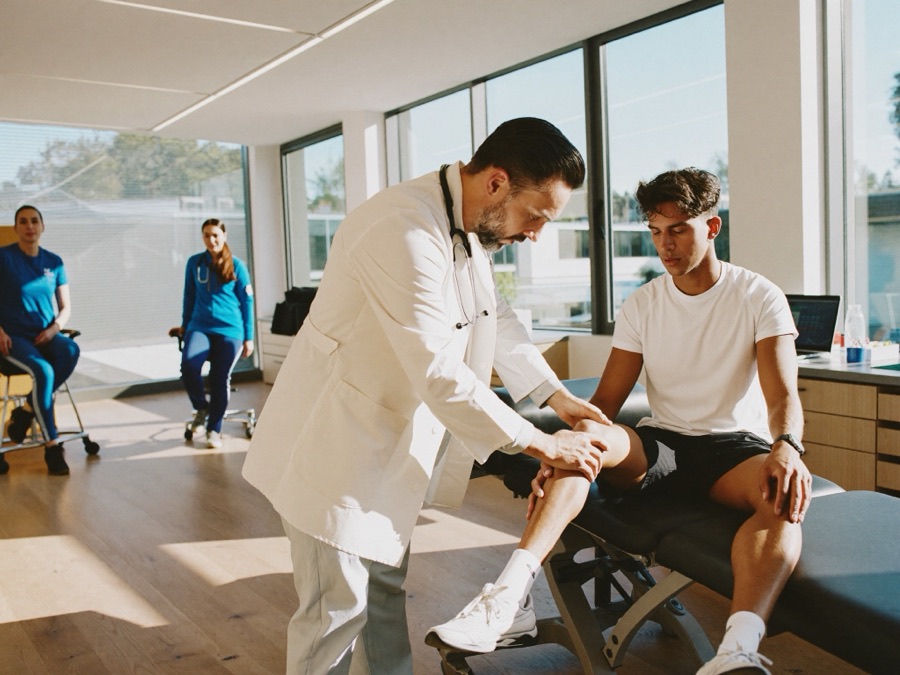
Our orthopedic and sports medicine specialists diagnose and treat injuries of the bones, joints and soft tissues. Whether the goal is finishing a season or walking without pain, treatment is matched to your activity level, not a generic protocol.
What we treat with it
- Knee, hip and shoulder injuries
- Rotator cuff tears
- Ligament sprains and tears
- Tendonitis and overuse injuries
- Fractures and joint instability
What to expect
Accurate diagnosis
Exam plus imaging pinpoints exactly which structure is injured and how badly.
Treatment that fits your goals
From bracing and injections to surgical repair, the plan matches the life you want back.
Rehab that finishes the job
Guided rehabilitation rebuilds strength so the injury stays fixed.
In depth
Our team of musculoskeletal experts provides care for the full spectrum of musculoskeletal disorders, including sports injury medicine and total joint replacement. The musculoskeletal system of the body is comprised of bones, muscles, ligaments, joints, tendons, and connective tissues. There are many fields of orthopedic surgery because the musculoskeletal system is so diverse. Among these are foot and ankle surgery as well as spinal surgery. You should make sure your orthopedic surgeon specializes in the particular type of surgery that you need when choosing one to treat your musculoskeletal problem.
Whether you are a child who got injured on the playground or an athlete who was injured in their sport, we treat patients of all ages. A successful recovery depends on physical therapy. During the same visit, patients can see their physician as well as their physical therapist because we work with physical therapy centers. Additionally, this enables the physician and physical therapist to collaborate during treatment, ensuring optimal patient recovery.
What are orthopedic conditions?
Muscles and skeletal systems are affected by orthopedic conditions. A person’s body is composed of muscular tissues, bones, nerves, joints, tendons, ligaments, and other connective tissues. Chronic orthopedic diseases and injuries can harm any of these tissues or structures.
General orthopedic problems include:
Bone fractures and dislocations
The inflammation of the joints causes pain, joint damage, and joint dysfunction. Arthritis is one of the most common types of chronic pain. It can be classified into more than 100 different types, including osteoarthritis, rheumatoid arthritis, psoriatic arthritis, and gout.
An inflammation of a bursa is known as bursitis. As ligaments, tendons, and muscles move over bones, bursae cushion the pressure from muscles, ligaments, and tendons.
Symptoms of muscular atrophy include weakness and difficulty moving as a result of the loss of muscle tissue. The condition happens when the muscles lack to use, such as when confined to bed, or when a nerve controls the muscles.
Any cancer that affects the musculoskeletal system is called musculoskeletal cancer. Cancers of the bone and cartilage include osteosarcoma and chondrosarcoma.
Normally, the immune system does not attack healthy cells and tissues in the body; however, it can do so when the body’s immune cells start attacking them. The musculoskeletal system can be affected by autoimmune diseases such as rheumatoid arthritis, psoriatic arthritis, lupus, and scleroderma.
The softening of bones in adults is osteomalacia. Affected muscles weaken and bones are damaged. This condition is most often caused by vitamin D deficiency.
Bone infections, such as osteomyelitis, are the most common types.
Osteoporosis is a condition in which bones become brittle and weak due to a lack of bone density. The result is increased fracture risk.
Those affected by pinched nerves have spinal nerve roots that have become compressed or irritated. Nerve roots, found between two vertebrae, are the places where a spinal cord nerve arises from. Pinched nerves are caused by problems with the spinal discs.
A tendon injury is caused by tendonitis, inflammation, and irritation of the tendon. A repetitive motion or force causes this type of injury.
A tendon sheath is inflamed when one develops tenosynovitis. The tendon connects muscles with bones through strong connective tissue. In bony tunnels, such as the wrist, tendon sheaths surround them. A smooth movement of the tendon is made possible by these sheaths.
The best thing to do if you’re having pain in your bones, joints, or muscles is to schedule an appointment with a physician. There are many cases in which the problem is related to overuse or strain, but it’s better to rule out more serious injuries immediately than to wait and risk the problem becoming worse. In the case of severe injuries to the musculoskeletal system, such as fractures and dislocations, you must seek immediate medical care.
What are the symptoms of orthopedic conditions?
Each orthopedic condition and body part will result in different symptoms.
- feeling numb, tingly, or weak.
- joint pain and swelling due to joint fatigue.
- inflammation of the organs or tissues after injury or disease.
- A joint that is deformed or unusually shaped.
- restricted range of motion and stiffness in the joint.
- inflammation of the tissues and inflammation of the organs.
- Mild, moderate, severe, or dull pain that may be stabbing, stabbing, achy, achy, or achy.
Symptoms like muscle spasms, numbness, swelling, and stiffness may come and go depending on your activity level and how your condition develops. A person’s ability to perform activities can be limited by pain caused by orthopedic conditions.
Symptoms that might indicate a serious condition
An orthopedic injury, such as a bone fracture or a joint dislocation, can become a serious medical emergency requiring immediate attention. In the event of any of the following symptoms, or if someone close to you has them, seek medical attention immediately:
- Hearing a snapping, grinding, or popping sound during the injury.
- Deformity of a joint or bone.
- Severe pain or swelling.
- Difficulty moving a joint or extremity.
- An open wound or bone sticking through the skin.
What causes orthopedic conditions?
Many of them occur as the result of trauma or chronic pain. This is an injury that occurs suddenly. An injury from a repetitive motion or force to a joint, such as to a tendon, causes chronic trauma. These injuries often unfold over a long period of time, for example, over the course of several weeks, months, or even years.
There are also many degenerative conditions related to orthopedics. A joint or joint structure can wear out over time if not taken care of and can lead to various types of medical conditions . The change in these conditions can lead to such conditions as osteoarthritis and spine problems.
What are the risk factors for orthopedic conditions?
There are distinct risk factors for different orthopedic problems. These include:
- Reducing your risk of orthopedic condition
- Using improper lifting techniques and body mechanics
- Working in a profession involving the same tasks every day, which increases strain on your body
- Being overweight or obese, which puts extra pressure on bones, joints, and joint structures
- Having a chronic disease, such as diabetes
- Playing sports or participating in recreational activities
Changing risk factors, you can control may help you reduce the risk of orthopedic conditions, such as:
- Maintaining a healthy weight.
- Cross-training with a variety of activities.
- Strengthening your bones with weight-bearing activities and plenty of calcium and vitamin D.
- Learning correct posture, body mechanics, and ways to lift heavy objects.
- Closely following your treatment plan for medical conditions.
- Wearing protective equipment during sports and recreational activities.
- Balancing strength training with stretching exercises.
In the event of an orthopedic condition, you must see your physician regularly. If you receive treatment early you may be able to avoid complications later on.
How are orthopedic conditions treated?
There are a variety of treatments for orthopedic conditions . Most of these treatments aim for the same outcomes. The treatment should provide for the improvement of quality of life, the relief of symptoms, and the prevention of future problems. You can achieve these goals by practicing RICE (rest, ice, compression, elevation), using over-the-counter and prescription medications, joint injections, and engaging in physical therapy. It may be necessary to perform orthopedic surgery to resolve the problem in some cases.
If you have above symptoms and conditions, WeCare Medical Specialty Group can help you. We have five offices across Northern Jersey. Please call our office at (973)996-2990 or book an appointment online immediately.
Frequently Asked Questions
What types of orthopedic injuries can WeCare Medical treat?
WeCare Medical specializes in treating diverse orthopedic injuries, including sports injuries, fractures, sprains, and strains. We also offer treatments for joint pain, arthritis, and other musculoskeletal conditions.
What orthopedic services does WeCare Medical offer?
WeCare Medical offers eclectic orthopedic services, including diagnostic imaging, physical therapy, joint injections, and minimally invasive surgery. Our team of orthopedic specialists can create a personalized treatment plan to address your specific needs and help you achieve optimal outcomes.
How long does it take to recover from orthopedic surgery?
Recovery times vary depending on the type of orthopedic surgery you have. Some surgeries, such as arthroscopic procedures, may require only a few days of recovery time, while others, such as joint replacements, may require several weeks or months of rehabilitation. Our orthopedic specialists will work with you to develop a customized recovery plan that meets your needs and goals.
What is minimally invasive surgery, and how does it benefit patients?
Minimally invasive surgery is a technique that uses small incisions and specialized tools to perform surgeries with less trauma to the body. This approach can result in less pain, shorter hospital stays, and faster recovery times compared to traditional open surgery. WeCare Medical offers minimally invasive surgery options for a variety of orthopedic procedures.
Do I need a referral to see an orthopedic specialist at WeCare Medical?
While we welcome referrals from other physicians and healthcare providers, you do not need a referral to see one of our Orthopedic Near Me . Simply schedule an appointment with us, and we will operate with you to diagnose and treat your orthopedic condition. We also offer telemedicine appointments for added convenience.
Questions we hear every day.
Not always. Bring any imaging you have, but our specialists can order exactly what is needed after your exam.
Yes. Acute injuries are prioritized, and same-week appointments are usually available across our five offices.
Absolutely. Most of our orthopedic patients are everyday people with joint pain that interferes with normal life.
Most sports and joint injuries heal without it. When surgery is the right call, we tell you why and what the alternatives look like.
Find out if this is your answer.
A board-certified specialist will confirm the right treatment at your first visit.